
Maybe you already own a property and are wondering what to do with it. Or perhaps you are planning to buy one and hoping the rental income will help cover the costs.
You have probably thought about Airbnb. You might also like the idea of having a tenant who stays longer, with fewer arrivals and departures to arrange.
So, which would suit you better?
A good place to start is with your property, the people looking for a place in your area, and how much time you want to spend looking after it.
Who would want to stay in your area?
Think about what brings people there. Is it the beach, nearby offices, a university, or somewhere people want to live with their families?
If visitors mainly come for holidays, short stays could be worth exploring. If people move there for work or need somewhere to live while finding a permanent home, a furnished rental for a few weeks or months may be useful. You may also find people looking for a home they can settle into for longer.
There could be demand for more than one option. The important thing is to look beyond the busiest time of year.
For example, if your area gets busy in summer, what happens once the holiday season ends? Would you still have people looking to stay, or would you need to plan for quieter months?
Start by looking at properties similar to yours nearby. Compare their location, size, features, and advertised prices. Just remember that an advertised price does not tell you how often a property is booked or what the owner actually receives.
How much would you have left after expenses?
A nightly rate on Airbnb can look attractive, especially when you multiply it by a whole month. But you may not have bookings every night, and there are costs involved in hosting each stay.
Before comparing it with monthly rent, think about:
- How long your property might be empty between guests or tenants
- Who will pay for electricity, water, internet, and other bills
- What you will spend on cleaning, maintenance, and help managing the property
- Whether you need furniture, appliances, or other items before someone can move in
- Which platform fees and service costs you need to include
Try looking at a full year, including the quieter periods. This gives you a more useful comparison than looking at your best possible month.
You do not need to know every figure straight away. Write down what you know, then make a list of the costs and information you still need to check.
How much time can you give it?
Imagine a guest messaging while you are at work because they cannot find the keys. Or a cleaner calling to say something needs replacing before the next arrival.
Who would handle it?
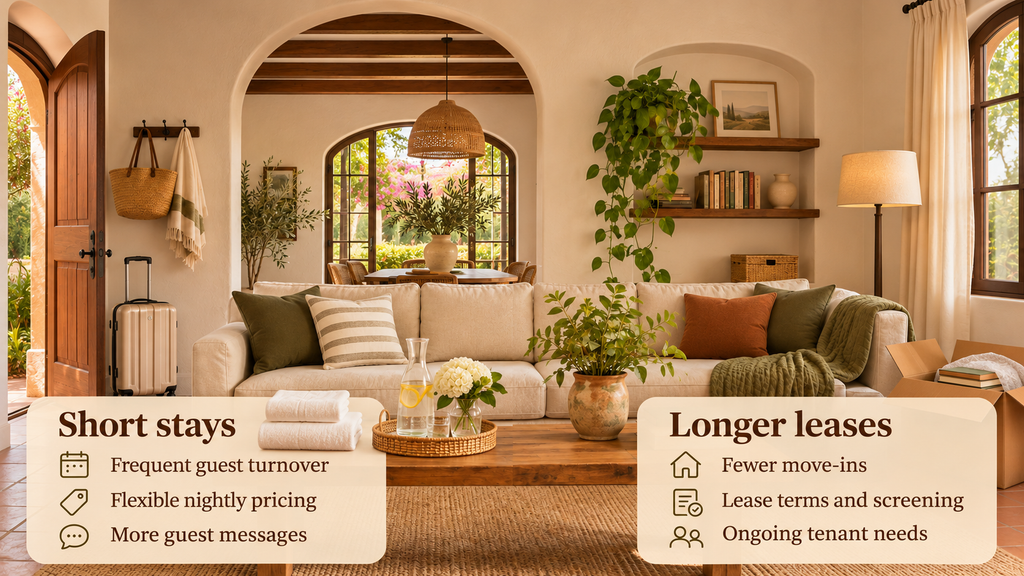
With short stays, someone needs to answer questions, arrange cleaning, keep calendars updated, and deal with problems when they happen. You can have support with this, but you will need to include it in your costs.
With a long term tenant, there are usually fewer changeovers to arrange. You will still need to manage inquiries, prepare for someone moving in, and respond when repairs or other issues come up.
Think about what would fit comfortably around your life. If you are busy with work, live far away, or simply prefer less involvement, consider what help you would need before deciding.
What about furnished stays for a few weeks or months?
This can be easy to overlook when you are only comparing holiday bookings with a long lease.
Someone relocating for work may need a place while they get to know the area. Another person may be on a temporary assignment and want a home where they can cook, do laundry, and settle into a routine.
Could your property suit someone like that?
Look into whether people need this kind of accommodation locally. Then check the requirements that apply to the stays you want to offer, including any minimum stay rules and paperwork.
What should you check before getting started?
Before spending money on furniture or creating your listing, find out what you are allowed to offer at your property’s location. Check the rental rules, building restrictions, registration requirements, and tax responsibilities with the relevant local authority or adviser.
Once you know which options are possible, think about how you will manage the rental.
Where will you advertise? Who will answer inquiries? How will you keep track of bookings and payments?
If you plan to list on several booking platforms, make sure the availability is connected correctly before accepting reservations. It is much easier to sort this out at the beginning than when two guests have booked the same dates.
You do not need to figure it all out on your own
You might still be at the stage of saying, “I have a property, but I don’t know where to start.” That is enough to begin a conversation.
At Rentals Made, we can help you explore comparable listings and available market information, talk through what each option would involve, and work out what you still need to check.
Our experience supporting rental operations in markets including Europe and the US helps us know which tools to look at and which setup details can be easy to miss. For legal, tax, or valuation questions, a qualified local professional can advise you.
Once you have chosen how you want to rent your property, we can help you set up your listings, connect your booking platforms, and organize how you manage inquiries and reservations.
Have a property in mind, or are you still planning? Book a consultation and tell us what you are considering. We can help you work out where to start.